

What is Data Mesh? Does My Organization Need It?
As enterprises scale, so does the complexity of their data. Centralized approaches like data warehouses and data lakes often struggle to keep up with growing demands for speed, flexibility, and accountability. Teams across business units generate and consume data, but bottlenecks form when a single centralized team is responsible for managing it all.
Enter Data Mesh: a modern, decentralized approach to data architecture designed to meet the challenges of scale.
What is Data Mesh?
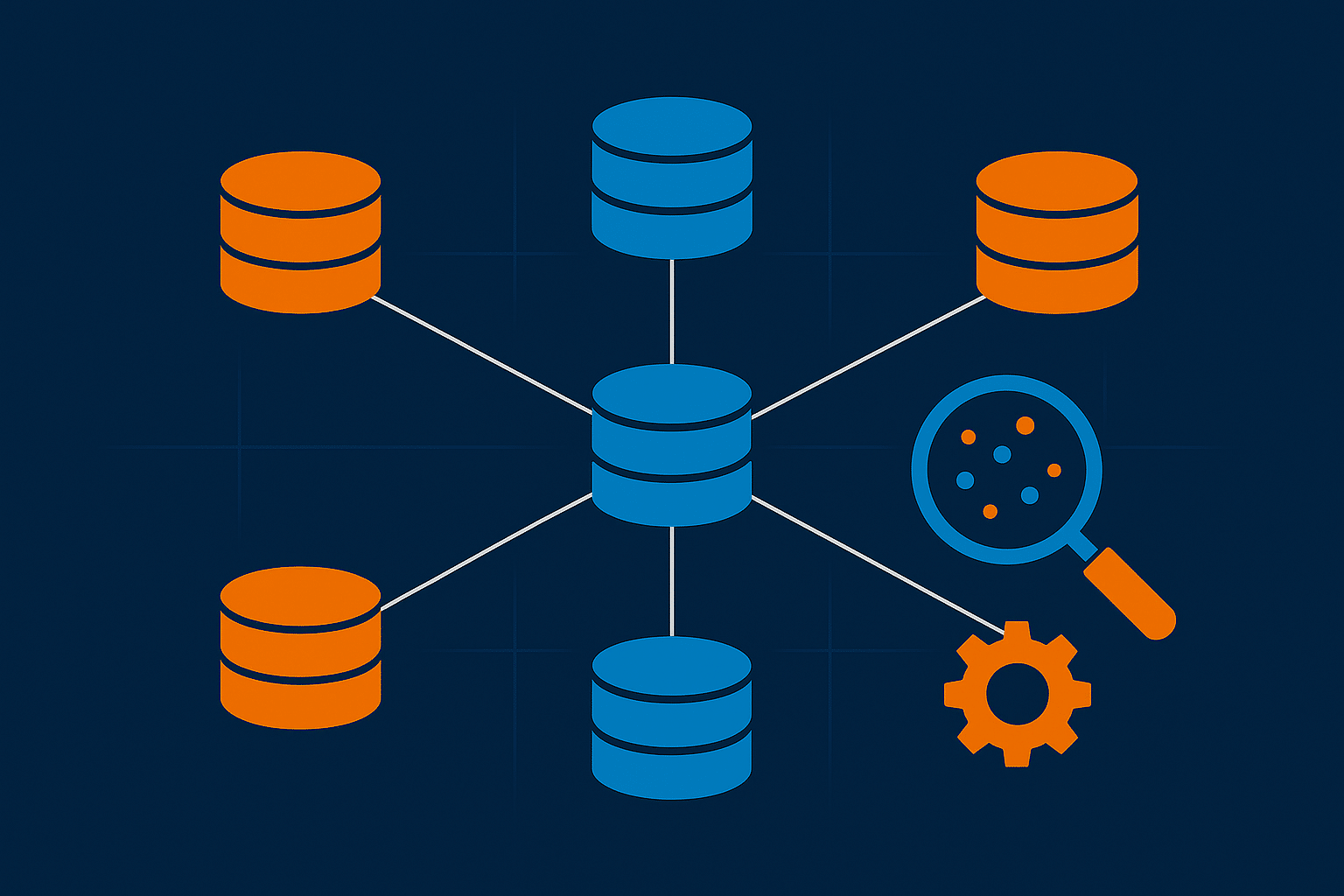
Data Mesh is a decentralized data architecture that shifts ownership of data away from a single centralized team and distributes it across domain teams. Instead of funneling all data through a central data engineering or BI function, each domain (such as marketing, finance, or operations) becomes responsible for the data it generates.
Unlike traditional architectures like data lakes or enterprise data warehouses, Data Mesh focuses less on centralization and more on treating data as a product that can be discovered, trusted, and reused across the organization.
The concept was first introduced by Zhamak Dehghani at ThoughtWorks, who argued that centralized data architectures could not keep pace with the complexity and speed required by modern enterprises.
What Are the Core Principles of Data Mesh?
Data Mesh is built on four core principles that guide how data should be managed and governed across organizations:
1. Domain-Oriented Ownership
Data is owned and managed by the teams that create it. For example, customer data may be owned by the customer success team, ensuring accuracy and accountability.
2. Data as a Product
Data is treated as a product with defined ownership, clear service-level agreements (SLAs), discoverability, and usability standards.
3. Self-Serve Data Infrastructure as a Platform
Teams have access to standardized tools and platforms that make publishing, consuming, and analyzing data easier without heavy reliance on central IT.
4. Federated Computational Governance
AI governance and responsible AI frameworks are crucial, so governance remains consistent across the enterprise through shared standards and automation, while still being distributed across domains.
Benefits of Data Mesh for Enterprises
Adopting a Data Mesh approach can unlock several benefits for enterprises:
Scalability across teams: No single data team becomes a bottleneck.
Improved data quality: Ownership at the domain level increases accountability.
Faster time to insight: Decentralization enables quicker access to trusted data.
Supports innovation: Empowers teams to experiment and innovate with their own data.
Is Data Mesh Right for Your Organization?
Before implementing Data Mesh, it’s important to ask:
Do you have multiple data-producing domains that need autonomy?
Are your centralized data teams overloaded with requests?
Is speed to insight a bottleneck for your business decisions?
Do you have leadership buy-in for a decentralized data strategy?
If you answered “yes” to most of these questions, Data Mesh may be a strong fit.
Where Data Mesh Excels
Data Mesh is not a one-size-fits-all solution, but it tends to perform best in:
Large enterprises with multiple departments and complex data flows.
Organizations transitioning to product-centric models, where accountability and ownership are already emphasized.
Multi-cloud or hybrid-cloud environments, where centralized storage and processing is difficult to maintain.
Conclusion
Data Mesh represents a paradigm shift from centralized to decentralized data ownership. By treating data as a product and enabling teams to manage their own domains, enterprises can achieve scalability, improve data quality, and accelerate insights.
Curious if Data Mesh is the right fit for your data strategy? Talk to a ProCogia Data Expert today.