
Introduction
Artificial Intelligence (AI) is transforming how businesses operate, enabling automation, personalization, forecasting, and decision-making at unprecedented scales. Yet, many AI initiatives stall before delivering value—bogged down by complex infrastructure demands, unclear objectives, and bloated timelines.
This paper outlines a critical distinction between two core components of modern AI systems:
- AI Accelerators: Frameworks and toolkits designed to dramatically reduce time-to-value by providing pre-built infrastructure and components.
- AI Agents: Intelligent systems that autonomously or semi-autonomously perform tasks on behalf of users or organizations.
Understanding and applying this distinction can be the difference between a 12-month development cycle and a 30-day deployment. This paper explores the practical, strategic, and financial implications of Accelerators vs. Agents and why leveraging both correctly is essential to enterprise success in the AI era.
AI Hype Meets Enterprise Reality
Global AI spending is projected to surpass $500 billion by 2027, according to IDC [1]. Yet a McKinsey report found that only 20% of companies deploying AI at scale have realized significant bottom-line benefits [2].
Why the gap? Because most AI initiatives:
- Require extensive, custom infrastructure development
- Struggle with cross-functional alignment
- Get bogged down in experimentation without delivery
AI has matured, but enterprise readiness hasn’t caught up. That’s where AI Accelerators and AI Agents come into play.
Defining the Two Pillars
What Is an AI Accelerator?
An AI Accelerator is a modular, reusable, and pre-engineered platform or toolkit that provides the scaffolding needed to quickly build and deploy AI systems. It includes components such as:
- Data ingestion and preprocessing pipelines
- Model training and tuning frameworks
- Monitoring and governance modules
- Integration layers with enterprise systems
These systems can reduce development time by over 80%[3], allowing teams to focus on customization rather than core infrastructure. Examples include Hal9, Databricks’ MLflow, Google’s Vertex AI, and AWS SageMaker JumpStart.
“Accelerators help teams avoid ‘rebuilding the wheel’ for every AI project. The goal is faster experimentation, faster deployment, and faster learning cycles.”
— Harvard Business Review
What Is an AI Agent?
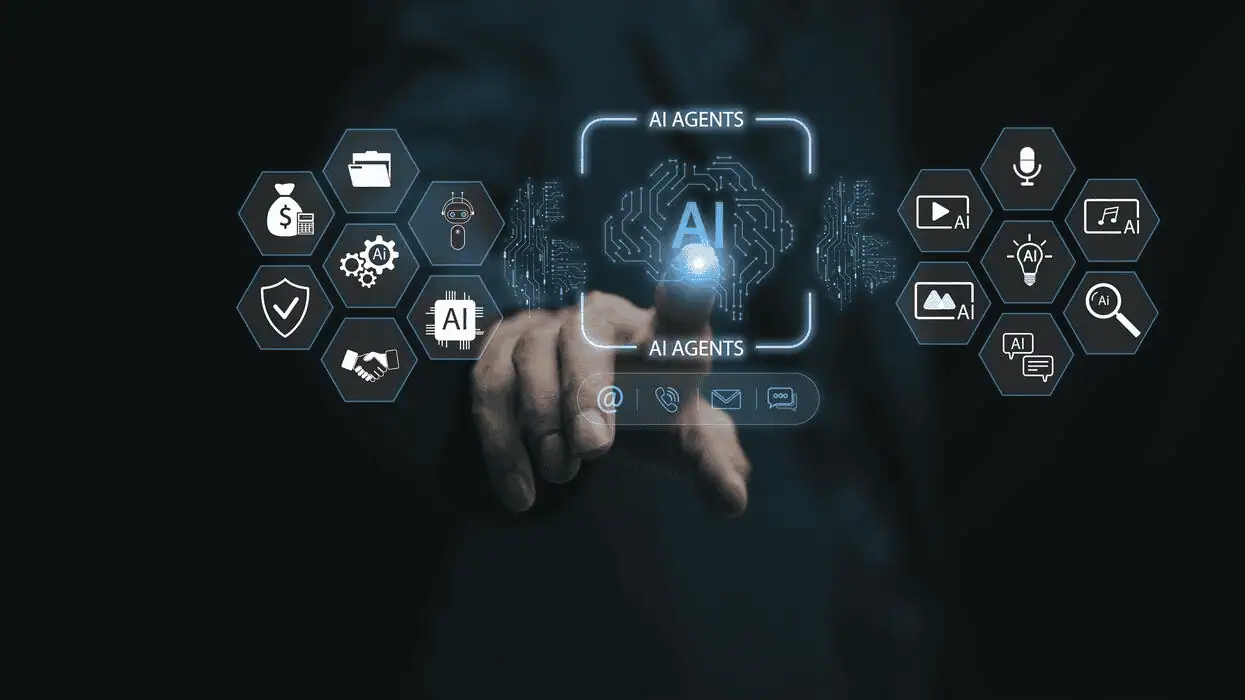
An AI Agent is an autonomous or semi-autonomous system designed to perform tasks in response to a goal or stimulus. Built on large language models, reinforcement learning, or other intelligent systems, agents can:
- Summarize documents
- Monitor systems and trigger alerts
- Engage in customer service dialogues
- Analyze financial risk
- Execute data transformations
Modern AI Agents may operate with goal-directed reasoning, planning, memory, and user feedback. Agentic architectures like Auto-GPT or ReAct are pushing the boundaries of what’s possible in task completion [5].
“AI Agents represent a paradigm shift from tools to collaborators.”
— Stanford Human-Centered AI Institute
Key Differences at a Glance
Category | AI Accelerator | AI Agent |
Purpose | Speed up development & deployment | Execute tasks autonomously |
Primary Users | Developers, engineers, architects | Business users, analysts, end-users |
Scope | Infrastructure-level | Application-level |
Focus | Toolkits, pipelines, deployment | Autonomy, reasoning, interaction |
Example Tools | Hal9, MLflow, Vertex AI | AutoGPT, LangChain Agents, Claude Assistant |
Typical Output | Accelerated build environment | Intelligent task execution |
The Missing Link
Before AI Accelerators can compress development, cycles or AI Agents can perform intelligent tasks, the underlying data environment must be modernized. According to the ProCogia Data Modernization for AI paper [^10], the success of any AI initiative hinges on the quality, availability, and accessibility of enterprise data.
“AI can’t run on disjointed, siloed, or legacy systems. Data infrastructure must be robust, scalable, and deeply integrated for AI systems to deliver impact.”
— ProCogia Data Modernization for AI, 2024
Key Components of Data Modernization:
- Cloud-Native Data Warehousing: Moving from legacy on-prem systems to platforms like Snowflake, Databricks, or BigQuery.
- Real-Time Data Pipelines: Using tools like Apache Kafka or Airflow to ensure data freshness and reactivity.
- Scalable ETL/ELT Frameworks: Modernized Extract-Load-Transform pipelines that support large-scale AI training and inference.
- Secure and Governed Data Access: Enforcing privacy compliance and role-based permissions to ensure AI models are ethical and safe.
- Connector Ecosystem: Pre-configured APIs and adapters for ingesting data from ERPs, CRMs, sensors, and other enterprise tools.
Without these elements, Accelerators have no data to accelerate—and Agents operate on unreliable or outdated inputs.
Strategic Use Cases
When to Use an Accelerator
- Rapid Proof of Concept: Accelerators reduce time-to-first value by providing a pre-configured foundation.
- Scalable Deployment: They enable consistent architecture and governance at scale.
- Talent Optimization: Minimize the need for infrastructure specialists on every AI project.
When to Deploy Agents
- Operational Automation: Agents can triage tickets, answer questions, or trigger actions without human input.
- Dynamic Decision Making: Autonomous systems can simulate, plan, and react in real-time.
- User-Facing Intelligence: Chatbots, virtual assistants, and co-pilots enhance user experience.
Real-World Impact
- Gartner estimates that over 70% of AI pilot projects fail to scale, largely due to infrastructure complexity [7]. Accelerators are critical to solving this problem.
- Microsoft’s Azure AI Studio offers “accelerator kits” that cut POC delivery timelines from 3 months to 3 weeks [8].
- Salesforce’s Einstein GPT, acting as an AI Agent, improved service case resolution times by 25% across pilot clients [9].
- ProCogia’s data modernization approach has cut time-to-model-deployment by over 60% in enterprise engagements [10].
The Future: Accelerators and Agents Together
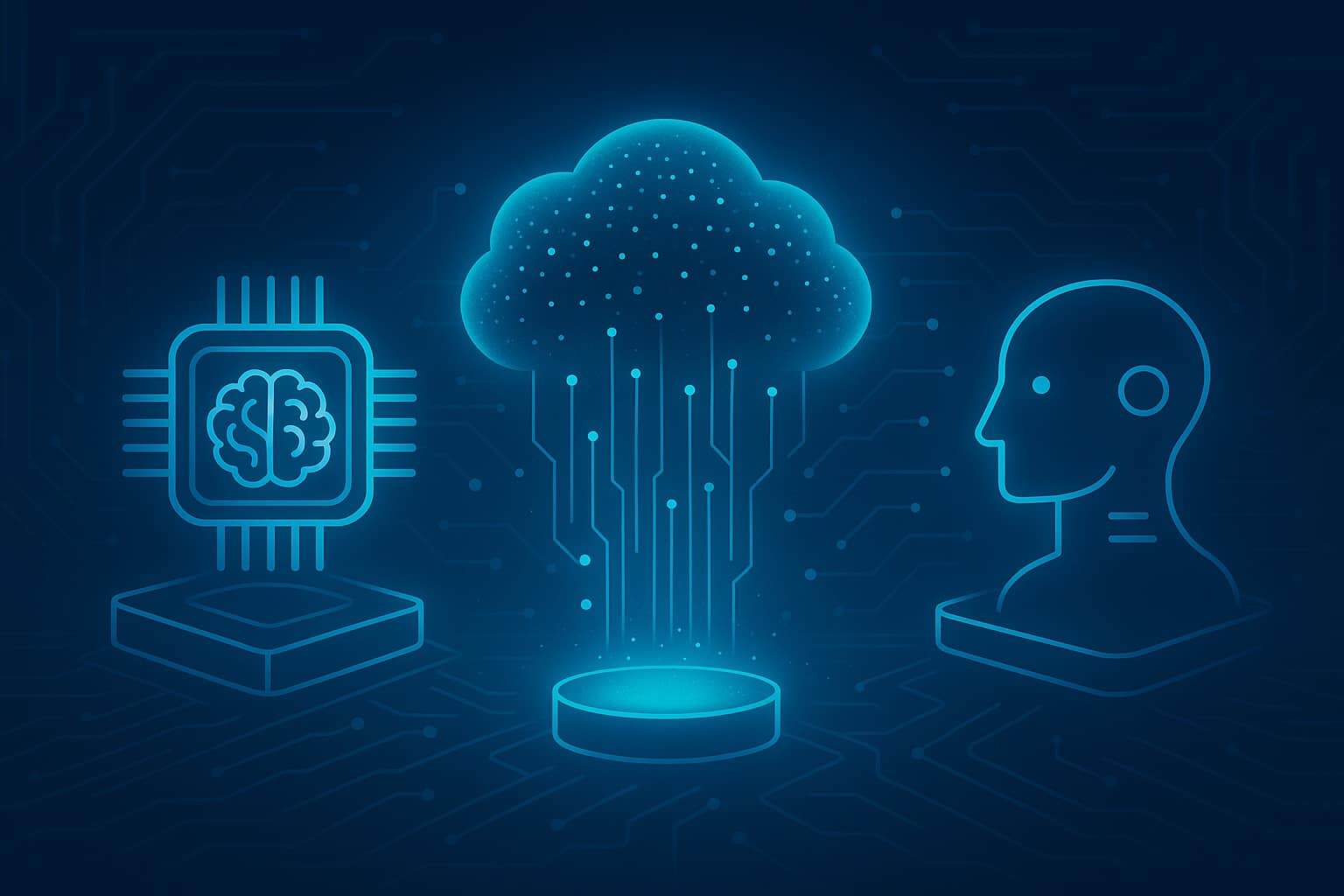
The real opportunity lies not in choosing between Accelerators and Agents—but in integrating both:
- Use Accelerators to build a strong, reusable, secure AI foundation.
- Deploy Agents to interact with users, systems, and data to drive action.
This fusion creates intelligent systems that are both robust and adaptive—capable of scaling impact without scaling cost.
Conclusion
AI success isn’t just about having smart models—it’s about building them smarter and getting them into the hands of users faster. AI Accelerators and AI Agents serve two distinct but complementary roles:
- Accelerators solve speed, repeatability, and infrastructure problems.
- Agents solve autonomy, productivity, and user value.
- Data modernization ensures both are feasible, scalable, and sustainable.
If your AI roadmap doesn’t start with modern data infrastructure and doesn’t leverage reusable frameworks and intelligent execution systems—you’re already behind.
References
[1]: IDC. Worldwide Artificial Intelligence Spending Guide, 2024.
[2]: McKinsey & Company. The State of AI in 2023.
[3]: Cognilytica. AI & ML Accelerator Use Cases, 2023.
[4]: Harvard Business Review. Why So Many AI Projects Fail, 2021.
[5]: OpenAI. AutoGPT and ReAct: Building Autonomous Agents, 2023.
[6]: Stanford HAI. Autonomous Agents and Human-AI Collaboration, 2023.
[7]: Gartner. Top Reasons AI Initiatives Fail, 2022.
[8]: Microsoft. Azure AI Studio Overview, 2024.
[9]: Salesforce. Einstein GPT Product Impact Report, 2023.
[10]: ProCogia. Data Modernization for AI, White Paper, 2024.