

7 Generative AI Use Cases in Data Analytics + Tips and Tools
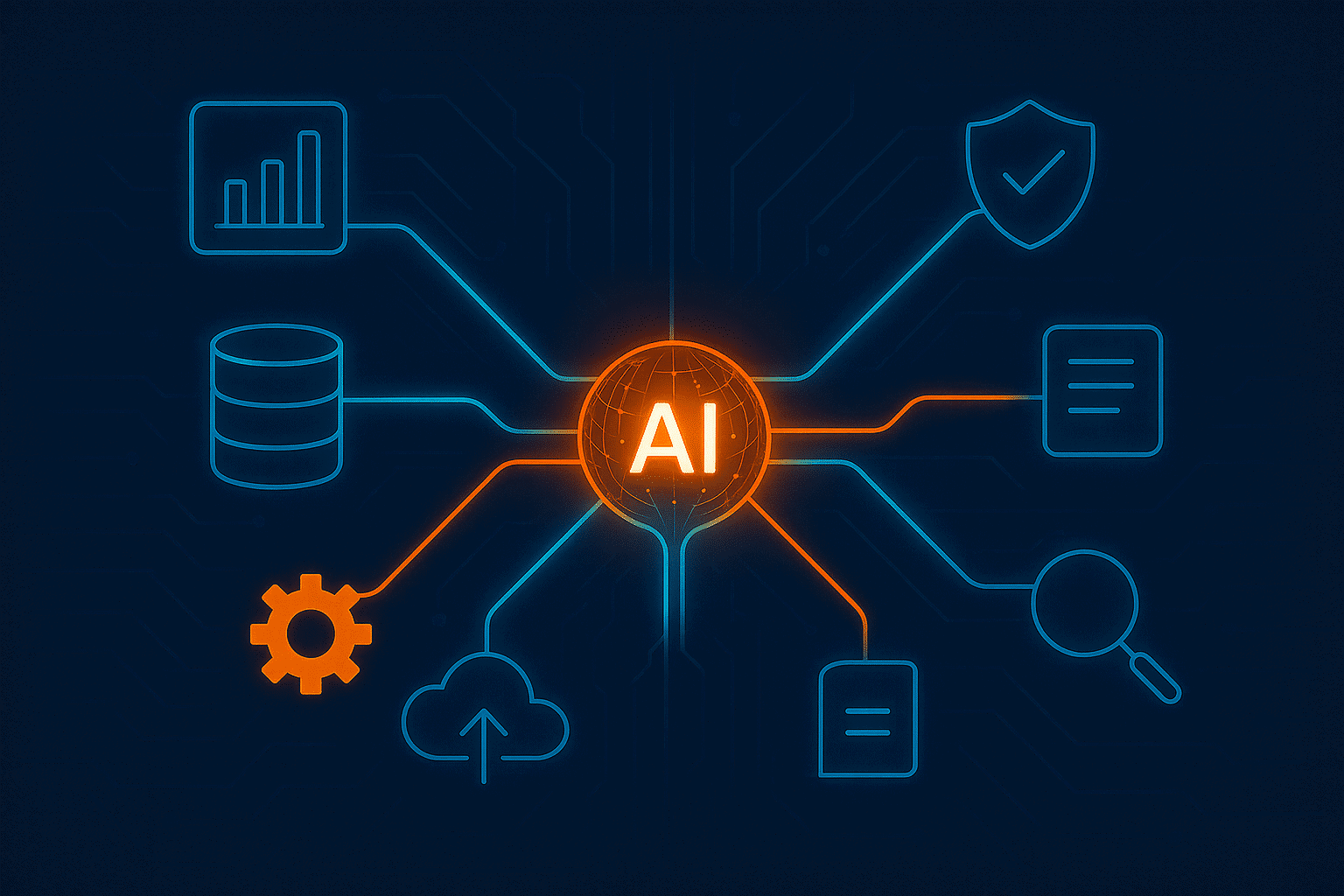
Generative AI is transforming the way enterprises approach data analytics and data science methods. Unlike traditional machine learning models that rely heavily on structured inputs and predefined rules, generative AI creates new outputs—whether that’s text, code, images, or even synthetic datasets—based on patterns it has learned. This ability makes it a powerful accelerator for analytics teams, enabling faster insights, automation, and innovation.
At ProCogia, we help enterprises cut through the noise and adopt generative AI responsibly, aligning technology with governance, compliance, and ROI. As leaders in data engineering and AI professional services, our role is to guide organizations from experimentation to enterprise-grade adoption.
Below, we explore seven high-impact generative AI use cases in data analytics aligned with ProCogia’s core service areas, along with tools and tips to get started.
1. AI-Enhanced Data Pipelines
Generative AI can help design, optimize, and maintain data pipelines. It can generate SQL queries, Python scripts, or ETL logic from natural language prompts and even suggest schema mappings or migration strategies.
Benefits: Reduces manual coding, accelerates migration, improves pipeline reliability.
Tools: dbt + AI, BigQuery AI, ChatGPT Code Interpreter.
👉 How ProCogia helps: Our data engineering consulting team integrates generative AI into modern pipelines, ensuring scalable, secure, and automated workflows tailored to enterprise environments.
2. Automated Data Governance & Metadata
Generative AI can auto-document pipelines, track data lineage, and summarize compliance reports. It can also generate readable reports from technical notebooks to improve governance visibility.
Benefits: Strengthens governance, reduces compliance risk, improves transparency.
Tools: DataHub + LLMs, Collibra integrations, GPT-4 with Jupyter.
👉 How ProCogia helps: We deliver enterprise data governance services, embedding AI-driven documentation and compliance into data platforms to meet regulatory and audit requirements.
3. AI for Cloud Migration Support
For organizations moving from on-premise systems to the cloud, generative AI can assist by recommending refactoring strategies, auto-generating validation scripts, and streamlining testing.
Benefits: Speeds up migration, reduces human error, lowers costs.
Tools: AWS Bedrock, Azure OpenAI, Snowflake Cortex.
👉 How ProCogia helps: We specialize in on-prem to cloud migration services, using AI to accelerate transitions, validate data integrity, and optimize multi-cloud environments.
4. Generative BI & Reporting
Generative AI enables business teams to create dashboards, charts, and reports using natural language prompts. Users can quickly ask questions like “Show me monthly revenue growth by region” and get instant visualizations.
Benefits: Democratizes access to insights, speeds up reporting, empowers non-technical users.
Tools: Power BI Copilot, Tableau GPT, ThoughtSpot Sage, Looker with Duet AI.
👉 How ProCogia helps: Our BI consulting services integrate generative AI into platforms like Power BI and Tableau, enabling executives and business teams to access trusted, actionable insights.
5. AI Agents for Workflow Orchestration
Autonomous AI agents can manage orchestration tasks like scheduling pipelines, triggering anomaly alerts, or optimizing ETL jobs. They reduce the need for constant manual oversight of workflows.
Benefits: Improves efficiency, reduces downtime, enables proactive operations.
Tools: LangChain, Prefect + LLMs, Airflow + GPT.
👉 How ProCogia helps: We implement AI-driven orchestration solutions that blend Airflow, Prefect, and LLMs to create resilient, automated data workflows for enterprises.
6. Synthetic Data for Testing & Privacy
When sensitive data cannot be used for development or testing, generative AI creates synthetic datasets that preserve statistical properties while protecting privacy.
Benefits: Supports innovation safely, enables model training, improves compliance.
Tools: Gretel.ai, Mostly AI, Synthea, OpenAI APIs for tabular data.
👉 How ProCogia helps: Our team builds privacy-preserving synthetic datasets that support innovation while ensuring compliance with HIPAA, GDPR, and other regulations.
7. AI-Driven Customer & Market Insights
Generative AI can analyze vast datasets and generate plain-language summaries of customer behavior, competitor activity, or market trends. It helps leadership teams make better decisions, faster.
Benefits: Improves speed to insight, enhances forecasting, supports executive decision-making.
Tools: Snowflake Cortex Agents, GPT-4, Gemini.
👉 How ProCogia helps: We provide advanced analytics consulting, combining generative AI with domain expertise to surface insights that drive strategic business decisions.
Tools & Platforms to Explore
Prompt-based platforms: ChatGPT, Claude, Gemini
Cloud-native integrations: Snowflake Cortex, Azure OpenAI, AWS Bedrock
Visualization & BI tools: Power BI Copilot, Tableau GPT, Looker with Duet AI
AI orchestration: LangChain, Airflow + LLMs, ReAct Agents
Pitfalls to Consider
While generative AI offers transformative potential, organizations must be aware of key risks:
Hallucinations: Incorrect outputs if no human validation loop exists.
Security & governance: Risks when feeding sensitive data into AI models.
Change management: Teams need AI literacy to adopt these tools effectively.
Tool overload: Avoid fragmenting workflows with too many disconnected platforms.
Successful Adoption: Tips to Get Started
Start small: Focus on low-risk, high-value use cases first.
Prioritize ROI: Look for areas where automation saves the most time or cost.
Cross-functional alignment: Build AI councils with IT, data, and business stakeholders.
Measure continuously: Validate outputs, monitor drift, and refine processes.
Conclusion
Generative AI is no longer experimental—it’s reshaping how enterprises analyze, manage, and act on data. From AI-enhanced pipelines to synthetic datasets, these use cases highlight how GenAI aligns with modern data engineering and analytics needs.
At ProCogia, we specialize in helping organizations implement generative AI responsibly, ensuring data governance, compliance, and measurable ROI. Whether you’re exploring AI-driven reporting, automating workflows, or building synthetic datasets, our data and AI consulting services provide the strategy and technical execution you need with an experienced data science team.
Curious how generative AI use cases in data analytics could supercharge your workflows? Talk to a ProCogia data expert today to identify the right opportunities and implement them responsibly.